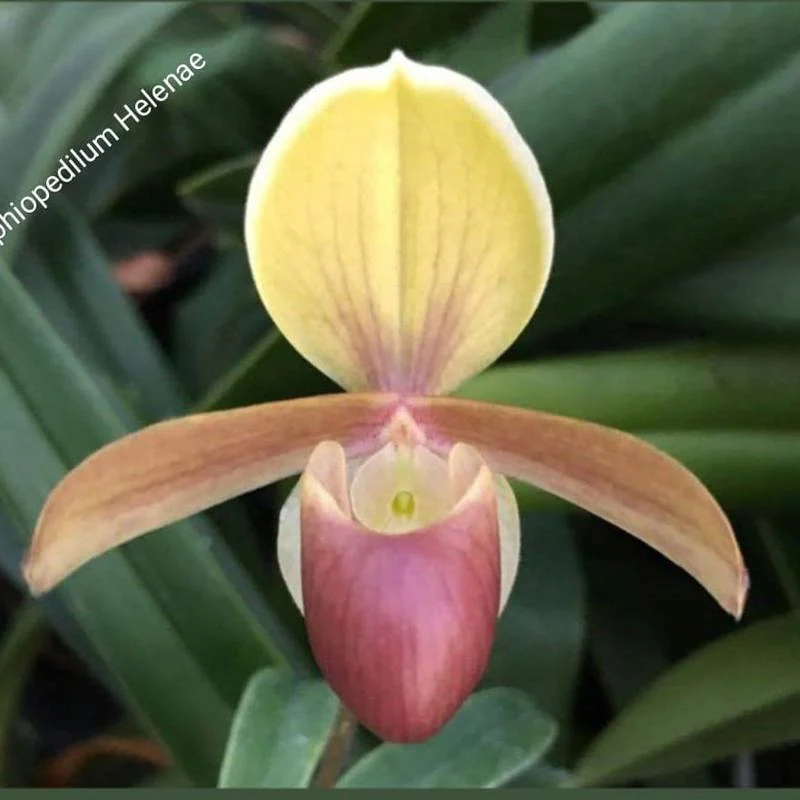
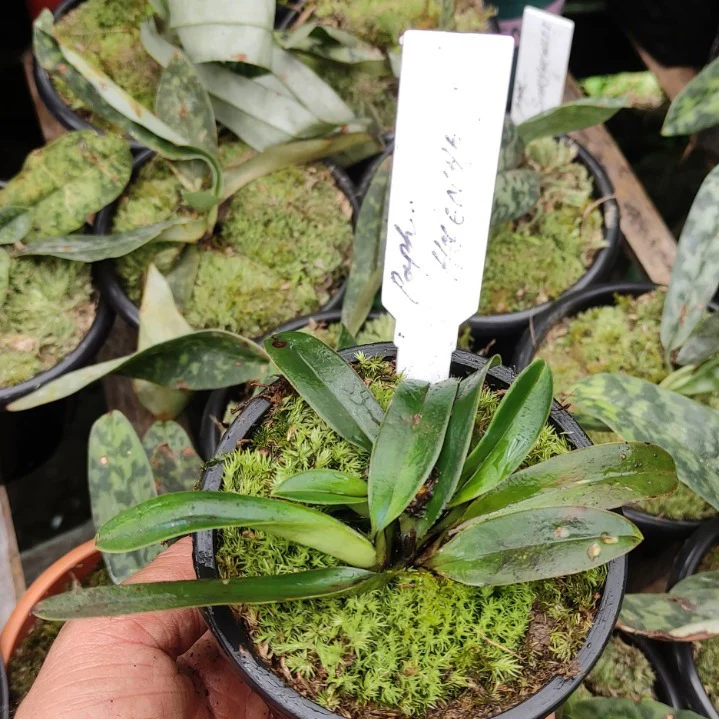
Paphiopedilum Helenae
Paphiopedilum helenae is one of the smallest slipper orchids, native to limestone cliffs of Vietnam and China. Its bright yellow flowers make a bold contrast to its tiny stature.
✅ Features:
🟡 Bright canary-yellow blooms
🟢 Extremely compact miniature species
🟢 Ideal for terrariums and small pots
🟢 Limestone habitat specialist
📏 Specifications:
Plant Size: 5–8 cm
Flower Color: Yellow
Growth Habit: Miniature, slow-growing
Light Requirement: Bright indirect light
Watering: Moist, excellent drainage required
Temperature: 18–25°C
Humidity: 60–80%
🌿 How to Care?
💧 Water lightly, avoid waterlogging
🌞 Needs bright filtered light
🪴 Use a well-drained bark and limestone mix
🌱 Fertilize monthly with diluted orchid feed
🏡 Where to Use?
🪴 Perfect for terrariums and tight spaces
🌿 Great for rare orchid collectors
🏡 Ideal for limited indoor setups
❓ FAQs
Q: How often does it bloom?
A: Typically once a year in late summer.
Q: Is it beginner-friendly?
A: More suited for intermediate growers due to habitat needs.
Product Information
Product Information
Shipping & Returns
Shipping & Returns
Description
Paphiopedilum helenae is one of the smallest slipper orchids, native to limestone cliffs of Vietnam and China. Its bright yellow flowers make a bold contrast to its tiny stature.
✅ Features:
🟡 Bright canary-yellow blooms
🟢 Extremely compact miniature species
🟢 Ideal for terrariums and small pots
🟢 Limestone habitat specialist
📏 Specifications:
Plant Size: 5–8 cm
Flower Color: Yellow
Growth Habit: Miniature, slow-growing
Light Requirement: Bright indirect light
Watering: Moist, excellent drainage required
Temperature: 18–25°C
Humidity: 60–80%
🌿 How to Care?
💧 Water lightly, avoid waterlogging
🌞 Needs bright filtered light
🪴 Use a well-drained bark and limestone mix
🌱 Fertilize monthly with diluted orchid feed
🏡 Where to Use?
🪴 Perfect for terrariums and tight spaces
🌿 Great for rare orchid collectors
🏡 Ideal for limited indoor setups
❓ FAQs
Q: How often does it bloom?
A: Typically once a year in late summer.
Q: Is it beginner-friendly?
A: More suited for intermediate growers due to habitat needs.